
What Makes Sciatica Worse? Common Triggers to Avoid
Introduction
Sciatica can cause pain that travels from the lower back into the buttock, thigh, or leg. For some people, symptoms may come and go, while others may experience persistent discomfort that affects sitting, walking, sleeping, or everyday activities. Certain movements and daily habits can make these symptoms more noticeable. Understanding common triggers can help you manage your routine and avoid unnecessary strain on the lower back.
Why Can Sciatica Pain Become Worse?
Sciatica usually occurs when the sciatic nerve is irritated or compressed, often because of problems involving the lower spine. A slipped or herniated disc, narrowing around the spinal nerves, or other spinal changes may contribute to symptoms.
The factors that aggravate sciatica are not the same for everyone. A movement that feels comfortable for one person may increase symptoms for another. Paying attention to when pain increases can help identify activities that may need to be modified.
Common Triggers That May Aggravate Sciatica
Sitting for Long Periods
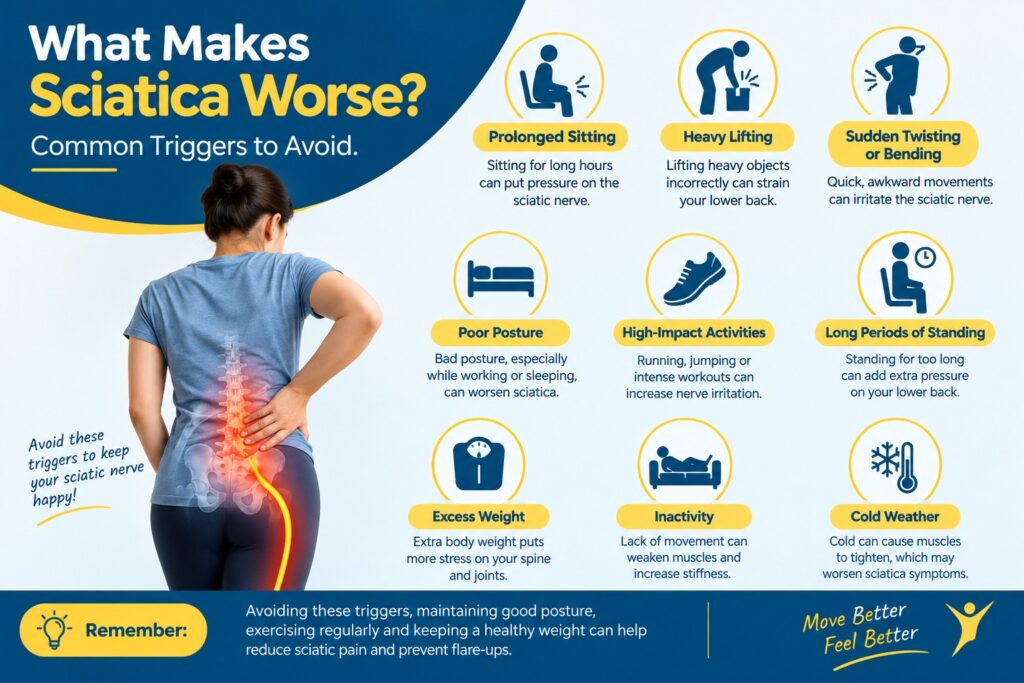
Remaining seated for several hours, particularly without changing position, may increase discomfort in the lower back and legs. This can be common for people who work at a desk or spend long periods travelling.
Taking regular movement breaks and changing positions throughout the day can help reduce prolonged pressure and stiffness.
Poor Posture and Slouching
Slouching while sitting or working can place additional strain on the lower back. An unsuitable chair or poorly arranged workstation may also contribute to discomfort.
Keeping the back adequately supported and adjusting the height of your chair and screen can make everyday sitting more comfortable.
Sudden Bending, Twisting, or Heavy Lifting
Sudden movements can sometimes aggravate an already sensitive lower back. Lifting heavy objects with poor technique may also increase strain.
When lifting is necessary, avoid twisting while carrying weight and use controlled movements. If a particular activity consistently increases radiating leg pain, it is better to modify it rather than repeatedly pushing through the discomfort.
Doing Too Much Too Soon
People may sometimes become more active as soon as their pain starts improving. However, suddenly returning to strenuous exercise, heavy household work, or demanding physical activity can cause symptoms to flare again.
A gradual return to activity is generally more appropriate. Your level of activity should be adjusted according to your symptoms and professional advice.
Staying Completely Inactive
While painful movements may need to be avoided, prolonged bed rest or complete inactivity is not usually helpful for recovery. Gentle movement, when appropriate, can help maintain mobility and prevent excessive stiffness.
The goal is to find a balance between avoiding aggravating activities and maintaining safe, comfortable movement.
Poor Sleep and Stress
Pain can interfere with sleep, and poor sleep may make it harder to cope with ongoing discomfort. Stress and fatigue can also affect how a person experiences pain.
Maintaining a regular sleep routine, taking appropriate breaks, and using healthy methods to manage stress may support overall recovery.
How Can You Reduce Everyday Sciatica Triggers?
Simple changes can make daily activities easier. Avoid staying in one position for too long, use proper posture while working, lift objects carefully, and gradually increase physical activity. If a specific movement repeatedly worsens your symptoms, discuss it with a healthcare professional rather than continuing to test it on your own.
When Should You Consider Sciatica Treatment?
Occasional back or leg discomfort may improve with appropriate self-care, but persistent, recurring, or worsening symptoms deserve medical evaluation. Sciatica treatment depends on the underlying cause, severity of symptoms, and how the condition is affecting daily life.
A proper assessment can help determine whether conservative care, physical rehabilitation, medication, injections, or another treatment approach may be appropriate. Getting evaluated early can also help identify whether another underlying spinal condition is contributing to the symptoms.
What Can a Pain Management Specialist Do for Persistent Pain?
When pain continues despite changes in activity and routine self-care, a pain management specialist can assess the location, pattern, duration, and severity of the symptoms. This evaluation can help determine whether further investigation or a specific treatment approach may be needed.
At ROPS Hospital, patients experiencing persistent back or nerve-related pain can seek an appropriate clinical assessment. Treatment recommendations can then be based on the individual’s symptoms, medical history, and underlying cause rather than applying the same approach to everyone.
When Should You Speak to a Pain Management Doctor?
Not every episode of sciatica requires specialist care, but recurring pain, increasing symptoms, or discomfort that interferes with work, sleep, walking, or daily activities should not be ignored. A pain management doctor can help assess ongoing symptoms and determine whether additional evaluation or treatment may be appropriate.
Seeking medical advice is particularly important when pain does not improve with reasonable self-care or when symptoms continue to interfere with normal activities.
When Is Sciatica an Emergency?
Some symptoms require urgent medical attention. Seek immediate medical care if sciatica is accompanied by new problems controlling the bladder or bowel, numbness around the inner thighs or genital area, or significant or worsening weakness in the legs.
Small Changes Can Make a Difference
Sciatica symptoms can sometimes become worse because of prolonged sitting, poor posture, sudden movements, excessive physical activity, or complete inactivity. Identifying your personal triggers and making practical changes to your daily routine can help reduce unnecessary strain.
If pain continues, keeps returning, or begins affecting normal activities, professional evaluation can help identify the underlying cause and guide appropriate care.