Pain Management Myths vs. Facts: What You Really Need to Know
Introduction
Chronic pain touches almost every household in one way or another. A father with a stubborn backache. A grandmother whose knees ache before the rain comes. A young professional who’s been living with neck pain since the work from home days began.
And, nowadays so much of what people believe about pain is simply not true.
These myths don’t just confuse people. They often delay proper treatment, leading many in Gujarat to search for a Best Pain Management Doctor in Ahmedabad only after months, sometimes years, of unnecessary suffering.
Dr Jay Panchal from Rops Hospital sees this pattern often. “Patients walk in after trying everything except the one thing that could have helped early on, proper medical guidance,” he says. “Most of that delay comes from myths they’ve picked up along the way.”
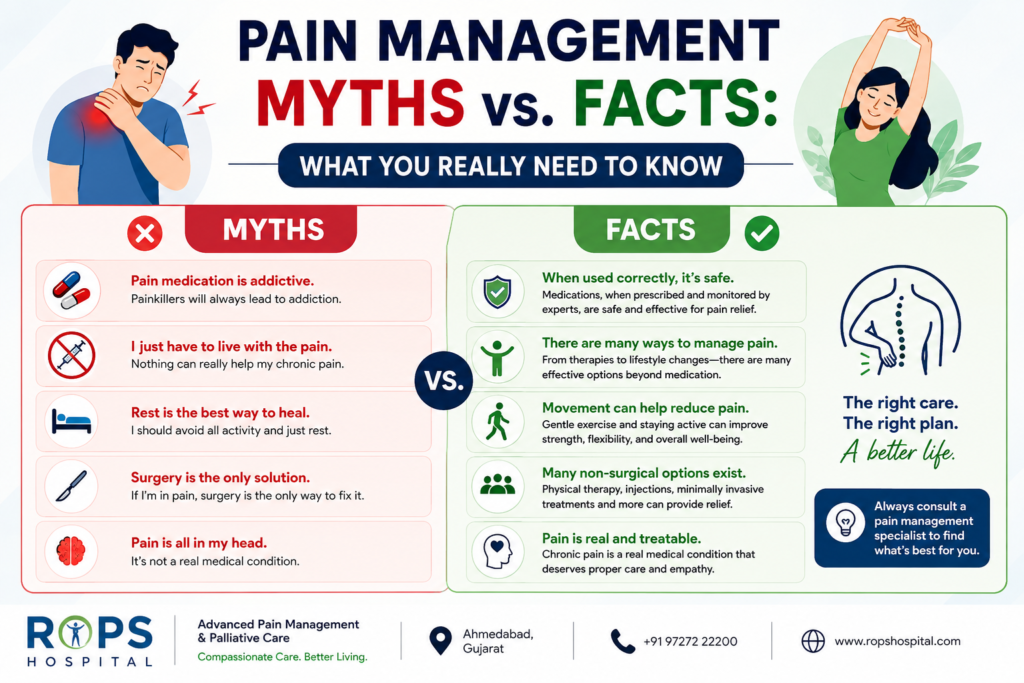
Myth 1: Pain Is Just Something When You Have to Live With
The fact is – The Best Pain Management Doctor in Ahmedabad is a medical condition, not a personality. A Modern pain management offers real, effective options; medications, physiotherapy, minor procedures, and lifestyle changes that can bring genuine relief.
Living with pain silently doesn’t make you strong. It just means you’re Not Taking help that already exists.
Myth 2: Painkillers Are the Only Solution
Many people assume pain treatment begins and ends with a strip of tablets.
- The truth is more layered. A good treatment plan usually combines a few approaches together.
- Physiotherapy This helps rebuild strength and movement, especially for joint and back issues.
- Targeted injections can calm inflammation right at the source, reducing the need for daily medication.
- Lifestyle adjustments, posture, sleep, weight, and daily movement, often make a bigger difference than people expect.
Myth 3: If Surgery Isn't Recommended, Nothing Else Can Be Done
The fact is, most painful conditions never need surgery at all. Doctors reach for surgery only when other options haven’t worked, or when there’s a structural problem that truly requires it. Everything before that stage, medication, therapy, interventional procedures, is designed to manage pain effectively without going anywhere near an operating table.
Myth 4: Pain Management Is Only for Old Age
Go any clinic today and you’ll see people in their 20s and 30s dealing with chronic Back pain, migraines, or joint discomfort.
Desk jobs, long screen hours, poor posture, and inactive lifestyles have brought pain complaints to a much younger crowd. Age isn’t the deciding factor here, how you use (or overuse) your body is.
Myth 5: A Pain Specialist Is Only for "Serious" Cases
Some people wait until pain becomes turning high before seeking help, thinking mild or moderate pain doesn’t deserve a doctor’s attention.
In reality, early consultation is exactly what prevents pain from becoming severe. Catching a problem when it’s manageable is always easier than treating it once it’s taken over daily life.
Myth 6: Natural Remedies Are Always Safer
Turmeric milk and hot compresses have their place, and they can genuinely help with mild discomfort. But they aren’t a give for medical evaluation when pain is persistent, or affecting your ability to function.
Dr Jay Panchal important points out: “The danger isn’t in trying home remedies. It’s in relying on them for months while an underlying issue keeps quietly getting worse.”
What This Means for Us
- Persistent pain deserves proper treatment, not silent tolerance.
- Treatment usually blends multiple approaches, not just pills.
- Surgery is the exception, not the rule.
- Face Age issue with who develops chronic pain.
- Getting checked early is a smart move, not an wrong anything.
If pain has been part of your daily routine like weeks or months, it’s worth when you having a proper conversation with a specialist rather than continuing to guess. At Rops Hospital, Dr Jay Panchal and the team focus on understanding the root cause first, then build proper treatment plan around what actually works for each patient.