Pain Management Options When Surgery Isn't an Answer
Introduction
Living with chronic pain is exhausting physically and mentally. And for many people in Ahmedabad, the assumption is simple: if it hurts long enough, surgery must be the fix. But that’s not always true, and honestly, it’s not always the best first step either.
The truth is, a lot of pain conditions respond well to non-surgical treatment. Surgery carries its own risks, recovery time, and cost and in many cases, it’s simply not necessary. This is where a good Pain Management Doctor in Ahmedabad becomes valuable someone who looks beyond “cut it out” and instead asks, “what’s actually causing this, and how can we treat it smartly?”
Why Surgery Isn't Always the Right Call
Surgery makes sense for certain structural problems. But for many chronic pain conditions back pain, joint pain, nerve-related pain, arthritis-related discomfort surgery is often a last resort, not a first one.
A few reasons doctors often hold off on surgery:
- Not every pain source is structural. Sometimes nerves, muscles, or inflammation are the real culprits, not something a scalpel can fix.
- Recovery can be long and uncertain. Some surgeries need months of rehabilitation, and results aren’t guaranteed.
- Non-surgical options have improved a lot. Modern pain management has more tools than ever before.
Dr Jay Panchal often points out that the goal isn’t to avoid surgery out of fear it’s to make sure it’s actually the right tool for the job before committing to it.
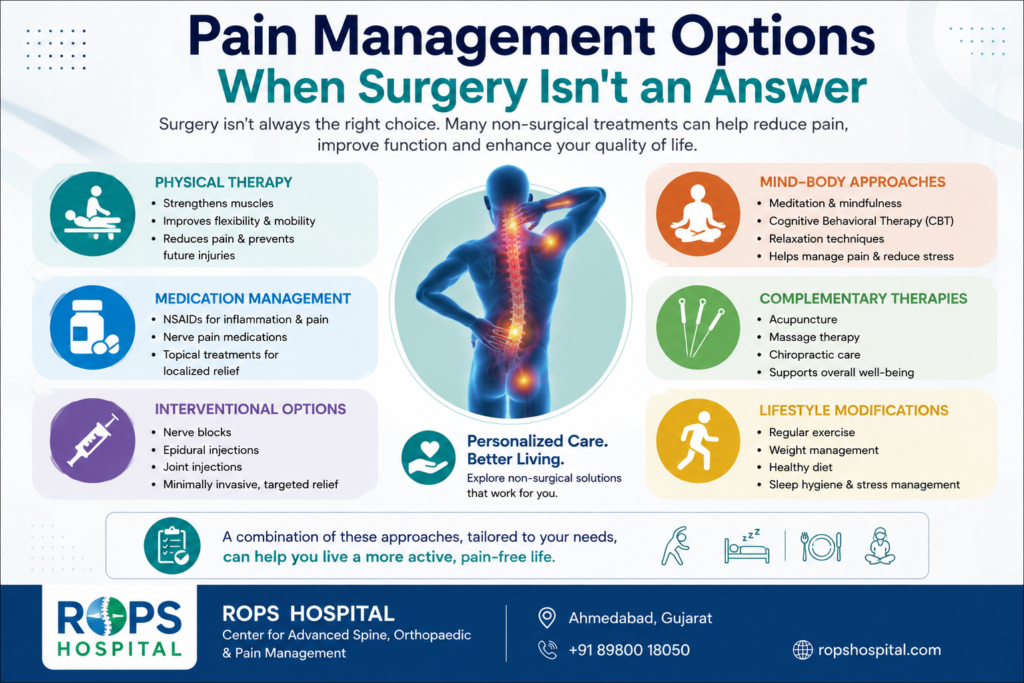
What Non-Surgical Pain Management Actually Looks Like
This isn’t just “take a painkiller and hope for the best.” It’s a structured, layered approach.
- Medication management
Not just popping pills this means figuring out the right combination and dosage to control pain without over-relying on any single medicine. - Physical therapy and movement-based treatment
Strengthening the muscles around a painful joint or area can reduce strain and pain significantly over time. Movement, done correctly, is often better medicine than rest. - Interventional procedures
These are minimally invasive treatments things like nerve blocks or targeted injections that can calm down pain signals without needing an operating room. - Lifestyle and posture correction
A lot of everyday pain (especially back and neck pain) comes from posture, work habits, or how we sit and sleep. Small corrections here often bring noticeable relief. - Psychological support for chronic pain
Pain isn’t just physical. Long-term pain affects mood, sleep, and stress levels and addressing that side of things genuinely helps physical symptoms too.
How a Pain Management Specialist Is Different From a Regular Doctor
A general physician treats symptoms broadly. A pain management specialist focuses specifically on understanding why the pain exists and builds a targeted plan around it often combining several of the methods above rather than relying on just one.
This is especially useful for conditions like:
- Chronic back and neck pain
- Arthritis and joint pain
- Sciatica and nerve pain
- Post-injury or post-accident pain
- Pain that hasn’t responded well to general treatment
When Should You See a Pain Management Doctor?
You don’t need to wait until pain becomes unbearable. If pain has lasted more than a few weeks, keeps coming back, or is affecting your sleep, work, or mood that’s a reasonable time to get it properly evaluated.
At Rops Hospital, the approach tends to focus on this exact idea: understand the root cause first, then choose the least invasive effective treatment. Surgery stays on the table as an option just not the default one.
The Bigger Picture
Pain management today isn’t about “living with it” or jumping straight to the operating table. It’s about having real options in between and having a doctor who takes the time to explain them clearly, so you can make an informed decision about your own body.