5 Crucial Things Caregivers Should Know About Managing Cancer Pain at Home
Introduction
Discovering that a loved one has cancer is life-changing. As a caregiver, your days quickly become a whirlwind of doctor appointments, medication schedules, and emotional hurdles. But among all your responsibilities, watching your family member deal with cancer pain is perhaps the hardest part.
When a patient returns home from the hospital, managing their comfort falls on your shoulders. Many families feel overwhelmed, believing that severe pain is simply an unavoidable part of the disease. But it doesn’t have to be.
Advanced medical care has evolved drastically. To help you navigate this journey with confidence and empathy, here are 5 crucial things every caregiver needs to know about managing cancer pain effectively at home.
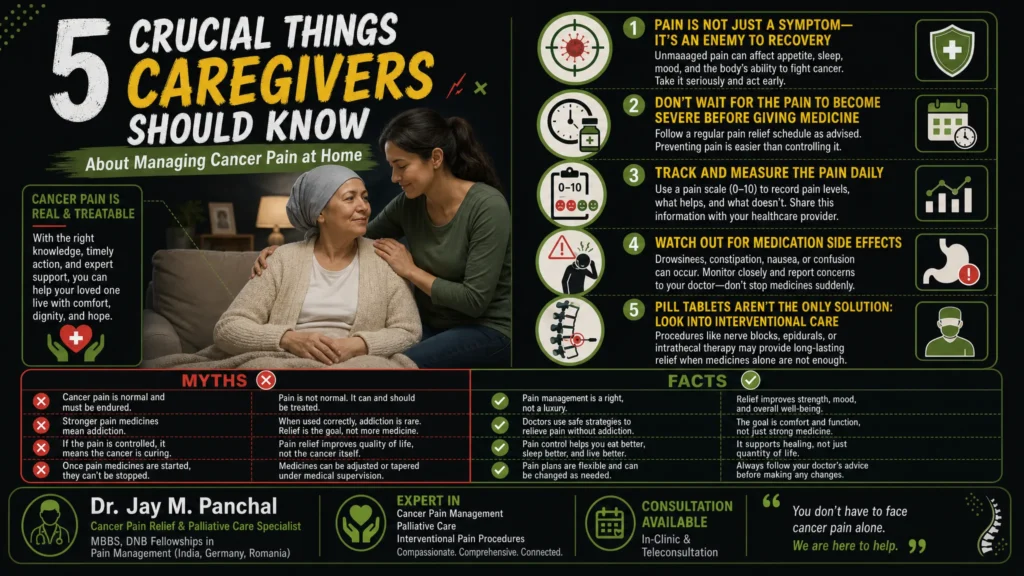
1. Pain is Not Just a Symptom—It’s an Enemy to Recovery
Many caregivers believe that pain is simply a side effect that must be silently endured while the main cancer treatments (like chemotherapy or radiation) do their work. This is a major misconception. Unmanaged chronic pain drains a patient’s physical strength, disrupts their sleep, causes severe depression, and weakens their immune system.
When a patient is in constant agony, their body is under continuous stress, which can actually slow down their overall recovery. Prioritizing pain relief isn’t about “giving up”—it is a core pillar of active healing and preserving their dignity.
2. Don’t Wait for the Pain to Become Severe Before Giving Medicine
One of the most common mistakes made at home is waiting for the patient to cry out in pain before administering their prescribed medication. Think of cancer pain like a heavy boulder rolling down a hill; it is much easier to stop it when it first starts moving than to stop it once it has gained full speed.
Give long-acting pain medications exactly on the schedule prescribed by your doctor, even if the patient feels okay at that moment. This maintains a steady level of medicine in their system and prevents “breakthrough pain” from spiking.
3. Track and Measure the Pain Daily
Pain is highly subjective. What feels like a mild ache to one person might feel intolerable to another. As a caregiver, you are the doctor’s eyes and ears at home. Keeping a simple, daily pain diary can make a massive difference in your loved one’s treatment plan.
- Use a scale from 0 to 10: Ask your loved one to rate their pain (0 being no pain, 10 being the worst imaginable).
- Note the timing: When does the pain spike? Is it worse in the morning, after eating, or during movement?
- Describe the sensation: Is it a dull ache, a sharp burning sensation, or a deep throbbing?
Sharing this diary with a specialist helps them fine-tune dosages precisely, ensuring your loved one isn’t over-medicated or left under-treated.
4. Watch Out for Medication Side Effects
Strong pain medications, particularly opioids or heavy analgesics, are highly effective but frequently come with side effects. The most common issues include severe constipation, nausea, and drowsiness.
Many patients stop taking their vital pain medications because the side effects feel worse than the pain itself. Never let them stop their medication abruptly. Instead, speak to your clinical team. Side effects are manageable with simple adjustments, dietary changes, or secondary prescriptions.
5. Pill Tablets Aren't the Only Solution: Look into Interventional Care
When oral medications cause immense nausea, or when maximum doses fail to provide relief, families often feel helpless. This is exactly where interventional pain management and parallel palliative care come into play.
Modern medicine offers advanced, minimally invasive procedures like neurolytic nerve blocks or intrathecal drug delivery systems. These techniques target the pain right at the source—the affected nerve level—without passing heavily through the digestive system. This means maximum comfort with a fraction of the side effects.
If you are looking for advanced guidance to bring your loved one comfort, consulting with the best pain management doctor in Ahmedabad can open doors to these highly specialized, non-surgical relief options. Experienced experts, such as those at dedicated centres like ROPS Hospital, understand how to carefully design personalized therapies that vastly improve a patient’s quality of life.
Myths vs. Facts: The Truth About Sciatica
To help clear the air around common fears families face in India, let’s break down a few widespread misconceptions:
Myth | Fact |
Myth: Using strong pain medications like morphine means the patient is in their final days. | Fact: Morphine and advanced nerve blocks are used at any stage of cancer to control severe pain, allowing patients to stay strong, mobile, and active during their treatments. |
Myth: Cancer patients will easily get addicted to prescription pain killers. | Fact: When taken exactly as directed under the strict supervision of a qualified expert, physical addiction is incredibly rare. The body utilizes the medicine purely to counteract biological pain signals. |
Myth: Pain is just a mental thing, and patients should practice strong willpower. | Fact: Cancer pain is entirely real, biological, and caused by tumors pressing against bones, organs, or nerves. Willpower cannot cure nerve inflammation; targeted medical care can. |
The Takeaway: You Do Not Have to Go Through This Alone
Being a caregiver is an act of profound love, but you don’t have to carry the medical burden by yourself. If standard prescriptions aren’t keeping your loved one comfortable, don’t hesitate to seek a second opinion.
Reaching out to a specialized clinic or consulting the best pain management doctor in Ahmedabad can give you the tools, procedures, and support needed to bring peace, comfort, and smiles back into your home.
Conclusion
Managing cancer pain at home can feel like a daunting responsibility, but it is one of the most impactful ways you can support your loved one. Remember, keeping them pain-free isn’t a luxury, it is a medical necessity that preserves their strength, boosts their mental well-being, and allows them to fight their illness with dignity.
You do not have to navigate this challenging path in isolation. If everyday medications are falling short, or if the side effects are becoming too difficult to handle, it is time to look beyond conventional treatments. By partnering with dedicated specialists and exploring modern interventional care, you can transform your home from a place of silent suffering into a sanctuary of comfort, peace, and meaningful quality time.